The Old Way
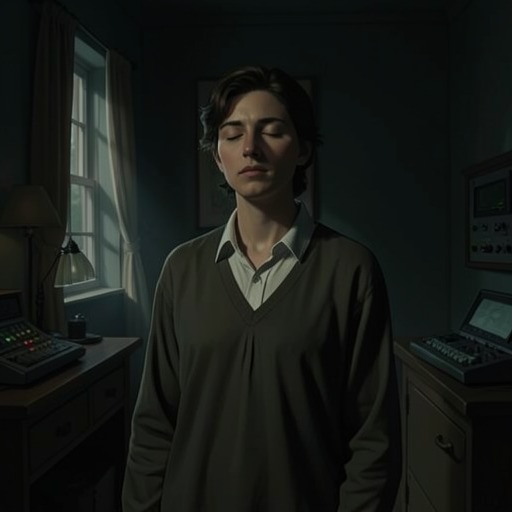
Bird BoxThe Old Way is Tucker’s early survival policy of collective self-blinding, adopted after a creature entered the settlement during a food search and a resulting catastrophe killed many residents. Rick describes blindness as the community’s absolute protection, then sets that desperate measure against a later, fortified way of life. The contrast makes the name more than a label for an earlier custom: it records how fear, scarce resources, and security failures shaped a community’s rules, and how those rules changed when its circumstances did.
Origins in Scarcity and Loss
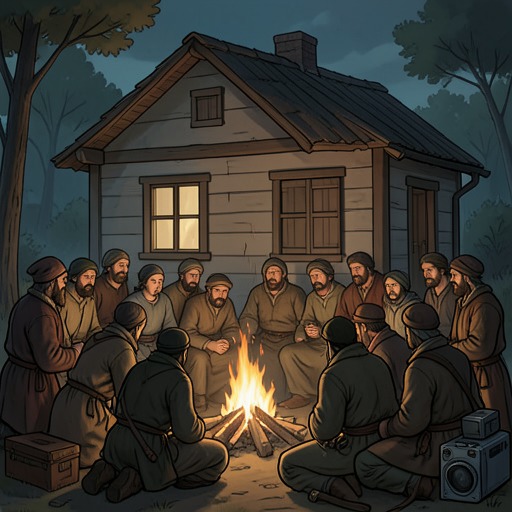
Rick explains that when the residents first arrived at Tucker, they were starving and lacked the amenities they had later managed to establish. They went out to hunt for food without the security they would eventually build. During one such expedition, a creature entered the settlement. Many people were lost; in the aftermath, a mother who had been rational suddenly killed four children. The account does not describe the incident as an isolated accident: it became the event that led the survivors to vow that they would never again take the same risk.
That vow was made for the good of the whole community, as Rick puts it. Survival depended not only on the danger of seeing a creature but also on how the residents organized food-gathering and protected the settlement while people were away. The Old Way emerged from that combined pressure: hunger compelled people to search beyond their defenses, while the intrusion showed what an exposure could cost those left behind.
Collective Blindness as Protection
The residents responded by blinding themselves with whatever they could find, including forks, kitchen knives, and their fingers. Rick presents this as a communal practice rather than an individual choice or a response limited to one household. Blindness became, in his words, “the absolute protection.” Its severity reflects the community’s judgment that continued sight posed a danger they could not otherwise control at the time.
The later disclosure that Constance can see, and has no scars, sharpens the distinction between the settlement’s collective history and the circumstances of every individual. Malorie considers that Constance may have avoided the practice and wonders what might have happened had she herself found the courage to blind her children four years earlier. The exchange frames the Old Way as a rule born of communal necessity but borne by particular people in deeply unequal ways; it does not establish that every resident underwent the same experience.
End of the Old Way
Rick says the community maintained this approach until, after a year, residents realized that they had fortified Tucker enough to ease the burden. He reports that there had been no security lapses since. The shift was therefore tied to a change in the settlement’s defenses, not to a claim that the creatures had disappeared or ceased to be dangerous. In Rick’s account, the Old Way belongs to a period when blindness was the only protection the group trusted; improved security made it possible to live without imposing that same burden.
At the time Malorie reaches Tucker, the institution has more than a defended hall: Rick says the facility is larger than it appears, grows its own food, and has captured animals, including chickens, a cow, and two goats. This later capacity for food production contrasts with the early starvation that sent people out to hunt. The contrast gives the Old Way a material history as well as a moral one: the policy arose under conditions of acute vulnerability and was relaxed as the community built both security and the means to sustain itself.